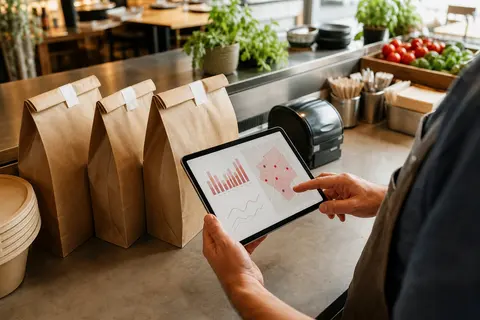
Tipless delivery is a pricing decision, not only a delivery feature
Delivery looks simple when it is just a button on an ordering page.
Behind that button is a promise: the restaurant can prepare the order, keep the food in good shape, get a driver assigned, and make the total feel reasonable enough that the customer finishes checkout.
Tipless delivery makes that promise clearer, but it does not make it free. With OmNom's delivery model, drivers are paid a $10 base amount per delivery, and restaurants can choose how much of that cost they want to subsidize. Restaurants still pay zero OmNom commission and zero monthly platform fees, while standard Stripe processing applies.
That means the operator question is not, "Should delivery be cheap at all costs?"
The better question is, "Which delivery orders are worth helping across the finish line?"
Start with pickup before you price delivery
Pickup is the cleanest baseline for direct online ordering. It tells the restaurant what customers buy, which menu items travel well, how long prep really takes, and whether the handoff process works when orders arrive from the web.
Do not skip that learning.
If pickup orders already feel chaotic, delivery will not fix the chaos. It will add a driver, a longer handoff, more packaging pressure, and a customer who is farther away from the restaurant when something goes wrong.
Before subsidizing delivery, make sure pickup has a few basics under control:
- menu items are current
- prep times are realistic
- staff know where online orders appear
- pickup bags are staged consistently
- refunds and missing-item issues have a clear process
- customers understand when the order will be ready
If those pieces are still being tuned, read Restaurant Pickup Order Handoff: How to Keep Direct Orders Moving before treating delivery as the next growth lever.
Know which orders can absorb a subsidy
A delivery subsidy should come from margin, not hope.
Some orders have enough room to support a restaurant contribution. Others do not. A $14 single entree, a heavy discount, and fragile packaging may leave very little room for the restaurant to cover part of delivery. A larger family meal, catering-style bundle, or high-margin repeat order may be different.
A practical subsidy review starts with four numbers:
- average direct online order size
- food and packaging cost
- typical Stripe processing cost
- the delivery amount the restaurant is considering covering
The goal is not perfect accounting before every order. The goal is to avoid a policy that sounds generous while quietly turning common orders into bad orders.
For example, a restaurant might decide not to subsidize delivery below a certain order size. Or it might subsidize only part of the driver cost, so the customer still sees a delivery charge but not the full amount. Or it might reserve a stronger subsidy for large dinner bundles that already travel well.
That is healthier than copying a marketplace-style discount and hoping volume makes up the difference.
For more on menu-level economics, read Restaurant Menu Price Strategy for Direct Online Ordering.
Keep the radius compact enough for the promise
Delivery radius is part of the price.
A short delivery route is easier to operate. The food spends less time in transit, the driver can return to availability sooner, and the restaurant has fewer awkward customer conversations about cold fries, melted items, or late arrivals.
A wide delivery area may look attractive on a map, but it can turn every subsidy into a larger risk. The restaurant pays or shares in the delivery cost, the driver spends more time on the run, and the customer experience becomes harder to predict.
That is why OmNom delivery is designed around a compact radius and real driver capacity. Delivery should only appear when the restaurant is delivery-enabled, the customer is within range, and there is dispatchable driver capacity for the zone.
If the restaurant cannot reliably serve the area, the right move is not to discount delivery harder. The right move is to keep delivery unavailable until the operation can support it.
Use the radius as an operating limit, not a marketing wish. For a deeper pass on that decision, read Restaurant Delivery Radius: How to Keep Online Ordering Reliable.
Decide what the subsidy is meant to accomplish
Not every subsidy has the same job.
Before changing the delivery price, name the reason:
- make first delivery orders feel easier to try
- protect dinner bundles from sticker shock
- encourage direct orders from nearby repeat customers
- compete with pickup when the customer cannot leave home
- keep the delivery total simpler than a tip-heavy checkout
Those are different goals. They may need different rules.
If the restaurant wants more first-time delivery trials, a small launch-period subsidy may make sense. If the restaurant wants to protect margin, a minimum order size may matter more than the subsidy amount. If the restaurant wants to reward nearby repeat customers, the compact delivery zone becomes the advantage.
The mistake is treating every delivery order the same. A delivery subsidy is a lever. It should have a purpose.
Do not hide the economics from staff
Delivery pricing decisions usually fail when only the owner understands them.
Staff should know the basic policy in plain language:
- when delivery is available
- what the delivery radius is meant to protect
- whether the restaurant covers part of the driver cost
- what minimums or bundles make delivery healthier
- why pickup may still be the better recommendation for some customers
That does not mean the whole team needs a finance meeting. It means managers should be able to explain the promise without making things up.
Clear staff understanding also helps with customer trust. If delivery is unavailable because the restaurant has no driver capacity, the team should not describe it as a website bug. If a customer asks why pickup is cheaper, the team should be able to say that delivery includes a real driver cost and that the restaurant may cover part of it when the order economics make sense.
Plain explanations beat vague apologies.
Compare delivery against the order you would lose
The strongest argument for a subsidy is not always "more orders."
It may be "more of the right direct orders."
If a nearby regular wants dinner delivered and would otherwise go to a marketplace, a direct tipless delivery path can help the restaurant keep more control over the order experience. The restaurant can present its own menu, manage fulfillment expectations, and avoid adding an OmNom platform commission or monthly OmNom fee on the restaurant side.
But that does not mean every delivery order should be subsidized.
Ask what would happen without the subsidy:
- Would the customer choose pickup?
- Would they still place delivery and pay the charge?
- Would they order through a marketplace instead?
- Would they choose a smaller order?
- Would they abandon because the total feels too high?
The answer may vary by daypart, menu category, distance, and order size. That is normal. Start conservative, watch the pattern, and adjust the subsidy around the orders you actually want more of.
Where OmNom fits
OmNom is built for restaurants that want direct ordering economics without giving up practical delivery options. Restaurants pay zero OmNom commission and zero monthly platform fees. Standard Stripe processing still applies.
For delivery, the point is control. OmNom's tipless delivery model gives the driver a clear base pay and lets the restaurant decide how much of that delivery cost to cover. The restaurant can keep the radius compact, show delivery only when capacity exists, and avoid promising a delivery experience the operation cannot support.
Start with pickup. Learn your order mix. Know which orders can absorb a subsidy. Keep the delivery zone tight. Then use the subsidy as a specific tool, not a blanket discount.
If you are deciding whether delivery should come next, read Pickup Only or Delivery? How Restaurants Should Decide What to Turn On First. If you are ready to set up direct ordering, start from OmNom or open the restaurant app.