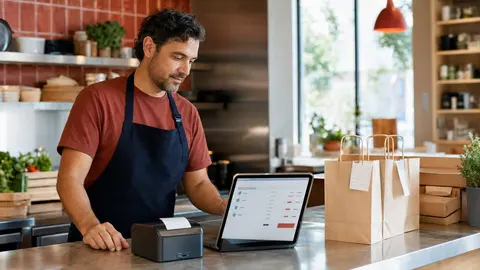
Small online orders are not always small operationally
A $9 online order can still require a ticket, payment processing, staff attention, packaging, bagging, and customer handoff.
That does not mean restaurants should reject every small order. It does mean order minimums deserve more thought than a random number copied from a delivery app.
OmNom gives restaurants direct online ordering with zero commission and zero monthly platform fees. Standard Stripe processing still applies. That structure helps restaurants keep more of each direct order, but the kitchen still has to decide which tickets are worth the same amount of operational motion.
The goal is not to punish customers for ordering light. The goal is to keep direct ordering profitable, predictable, and easy to explain.
Start by separating pickup from delivery
Pickup and delivery minimums should usually be different.
Pickup orders can often support a lower minimum because the restaurant does not have to coordinate a driver, travel time, or delivery handoff. A small pickup order may still be worth accepting if it fits the line, uses normal packaging, and brings the customer back through your owned channel.
Delivery is different. Even with a direct ordering system, delivery adds real operational pressure:
- the order has to be worth preparing
- the customer address has to be practical
- the driver path has to make sense
- the packaging has to survive the trip
- the handoff has to happen without confusing the kitchen
That is why a restaurant might keep pickup open with no minimum or a low minimum, while setting a higher threshold for delivery. If you are still deciding whether delivery should be on at all, read Pickup Only or Delivery? How Restaurants Should Decide What to Turn On First.
Minimums work best when they match the actual cost of the order type.
Look for the tickets that create friction
The right minimum is not always the number that makes the spreadsheet look clean. It is the number that removes the orders your team regrets accepting.
Look for patterns like:
- one low-priced item that requires expensive packaging
- a side-only order that still interrupts the line
- a drink-only order during peak hours
- delivery tickets that are too small to justify the route
- orders where modifiers take longer to read than the food takes to make
Those are the tickets that usually need a rule.
Sometimes the fix is an order minimum. Sometimes it is better menu design. A side-only order may be fine if the customer adds a drink or another item. A complex entree may be fine if the modifier groups are clear. A low-ticket pickup order may be fine during slow hours but not during the Friday rush.
Before you raise the minimum, make sure the menu itself is not creating the problem. This pairs closely with Restaurant Menu Modifiers: How to Keep Online Orders Accurate Without Slowing Checkout and Restaurant Online Ordering Menu Checklist: What to Fix Before Launch.
Use bundles and add-ons before hard limits
A hard order minimum is clear, but it is not the only tool.
Many restaurants can protect margin by making the right add-ons easier to choose:
- sauces
- sides
- drinks
- desserts
- family-style portions
- combo-style groupings
- catering-adjacent trays for larger orders
This is not about tricking customers into spending more. It is about making natural additions visible at the moment they are useful.
If the customer is $3 short of a delivery minimum, a clear side or drink option feels better than a dead-end error message. If a lunch pickup ticket is too small to be worth the interruption, a simple combo path may solve the problem without making the restaurant feel strict.
The best online ordering menus do not only list food. They guide customers toward orders that are easier for the restaurant to prepare and easier for the guest to enjoy.
Make the minimum visible before checkout
Order minimums become frustrating when customers learn about them too late.
If a guest has already built a cart, entered contact details, and reached payment before discovering a minimum, the rule feels like a surprise fee even when it is not one.
The cleaner path is to show the expectation early:
- make pickup and delivery rules clear before checkout
- show how much more is needed when the cart is short
- avoid vague messages like "order not allowed"
- keep the language calm and direct
- do not bury the rule in a policy page
This is especially important on mobile. Most online orders are not placed by patient customers sitting at a desk. They are placed by hungry people who want the next step to be obvious.
A clear minimum can feel fair. A hidden minimum feels like friction.
Revisit minimums after the first real orders
Do not treat the launch minimum as permanent.
The first version is usually an educated guess. After real orders come through, the restaurant can review:
- average pickup ticket size
- average delivery ticket size
- which items appear in low-margin orders
- which hours create the most small-ticket friction
- whether customers abandon carts near the threshold
- whether add-ons are solving the problem without heavy-handed rules
This is one reason direct ordering is useful. When the restaurant owns more of the ordering path, it can make practical adjustments based on its own menu, hours, and customer behavior instead of only adapting to a marketplace's default structure.
If your restaurant is still getting the basic ordering path live, start with How to Add Online Ordering to Your Restaurant Website Without a Full Redesign. If the economics question is broader than minimums, read Zero-Commission Online Ordering vs Marketplace Commissions.
Where OmNom fits
OmNom is built for restaurants that want direct online ordering without adding another restaurant-side commission or monthly platform fee. Standard Stripe processing still applies, but OmNom does not take a percentage of each restaurant order.
That makes minimums less about fighting platform economics and more about designing a direct ordering flow your kitchen can actually run. Restaurants can keep pickup approachable, set delivery rules more carefully, and shape the menu around orders that make sense operationally.
If you want a direct ordering setup that keeps the economics simple before you tune the details, start with OmNom or browse more practical guides on the OmNom blog.